Toronto

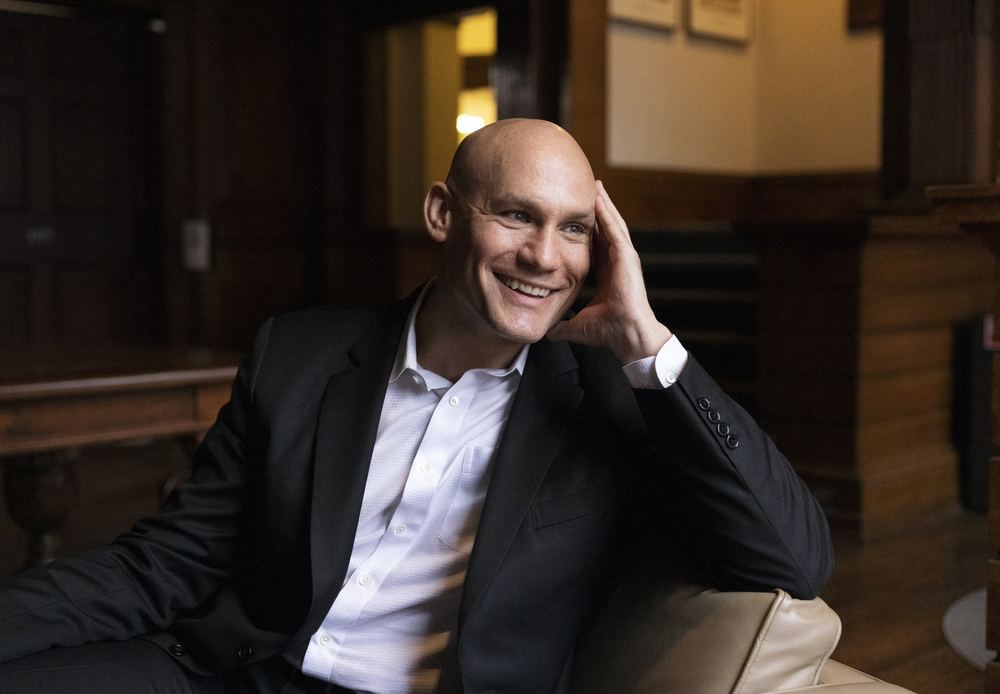
Benjamin
Alarie

Building the tools that are reshaping legal reasoning, and writing about what that means.

Benjamin Alarie
Founder Blue J Chair Osler Chair, U of T Law Author Four books

A note on who I am.

Benjamin Alarie is the CEO and co-founder of Blue J, an AI-native tax research platform serving thousands of firms worldwide, including Big Four accounting firms. He holds the Osler Chair in Business Law at the University of Toronto. He is the co-author of Superjustice (Oxford University Press, 2026) with Samuel Becher, and of The Legal Singularity (University of Toronto Press, 2023) with Abdi Aidid.

Benjamin Alarie is the CEO and co-founder of Blue J, the AI-native tax research platform he founded in 2015 as a commercialization of his academic work on machine prediction of legal outcomes. Blue J is now a category-defining product in computational tax analysis, serving thousands of client organizations including Big Four accounting firms.

He is a full professor at the University of Toronto Faculty of Law, where he has held the Osler Chair in Business Law since 2016. He holds an LLM from Yale Law School and clerked at the Supreme Court of Canada for the Honourable Madam Justice Louise Arbour.

He is the co-author of Superjustice (Oxford University Press, July 2026) with Samuel Becher, and of The Legal Singularity (University of Toronto Press, 2023) with Abdi Aidid, which won the AAP PROSE Award and was shortlisted for the Donner Prize. He coined the term "legal singularity" in 2016.

Benjamin Alarie is the CEO and co-founder of Blue J, the AI-native platform that has become a professional standard for computational tax research. Founded in 2015 as a commercialization of academic research on machine prediction of legal outcomes, Blue J now serves thousands of firms across North America and Europe, including Big Four accounting firms.

He is a full professor at the University of Toronto Faculty of Law, where he has held the Osler Chair in Business Law since 2016, and served as Associate Dean of the First Year Program from 2011 to 2015. He is one of the youngest people ever to hold a tenure-track position at the school, appointed at age 26. His scholarship spans tax law, judicial decision-making, economic analysis of law, and the computational future of legal reasoning, with peer-reviewed articles in the University of Toronto Law Journal, the Canadian Tax Journal, the British Tax Review, the American Business Law Journal, and many others.

He holds a BA in economics from Wilfrid Laurier University (with high distinction), an MA in economics from the University of Toronto, a JD from the University of Toronto (with honours), and an LLM from Yale Law School. He clerked at the Supreme Court of Canada for the Honourable Madam Justice Louise Arbour.

He is the co-author of Superjustice: Law in the Age of Artificial Intelligence (Oxford University Press, July 2026) with Samuel Becher, and of The Legal Singularity: How Artificial Intelligence Can Make Law Radically Better (University of Toronto Press, 2023) with Abdi Aidid. The Legal Singularity won the 2024 AAP PROSE Award and was shortlisted for the Donner Prize. He also co-authored Commitment and Cooperation on High Courts (Oxford University Press, 2017) and is a long-standing co-author of Canadian Income Tax Law, now in its sixth edition. He coined the term "legal singularity" in 2016, the same year he received the Clifford Chance Prize at NeurIPS in Barcelona for his paper "Regulation by Machine."

He lives in Toronto with his partner Khrista and their two daughters.

Two arguments about the same future.

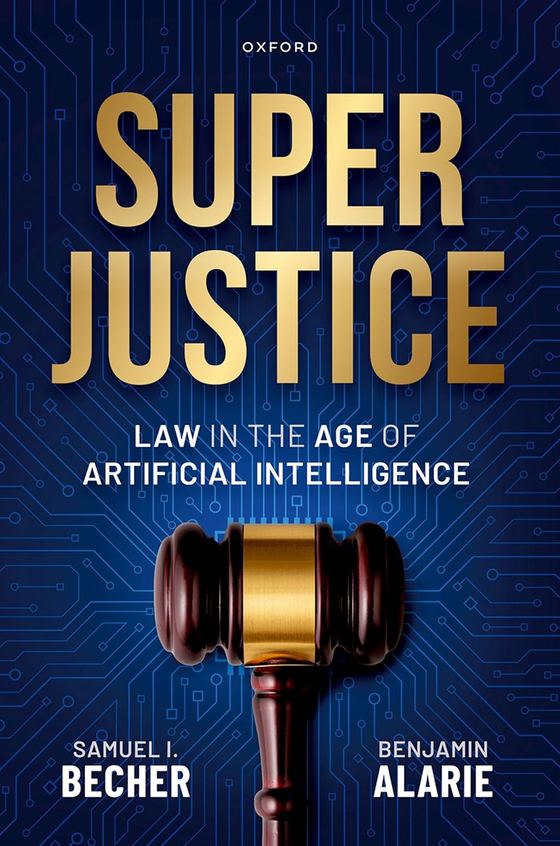
Superjustice: Law in the Age of Artificial Intelligence
Oxford University Press July 2026

Superjustice

with Samuel Becher

Today's legal systems were not built for the AI age. Superjustice reimagines them. A book about what justice can become when the constraints of scarcity, delay, and inconsistency are relaxed by computation.

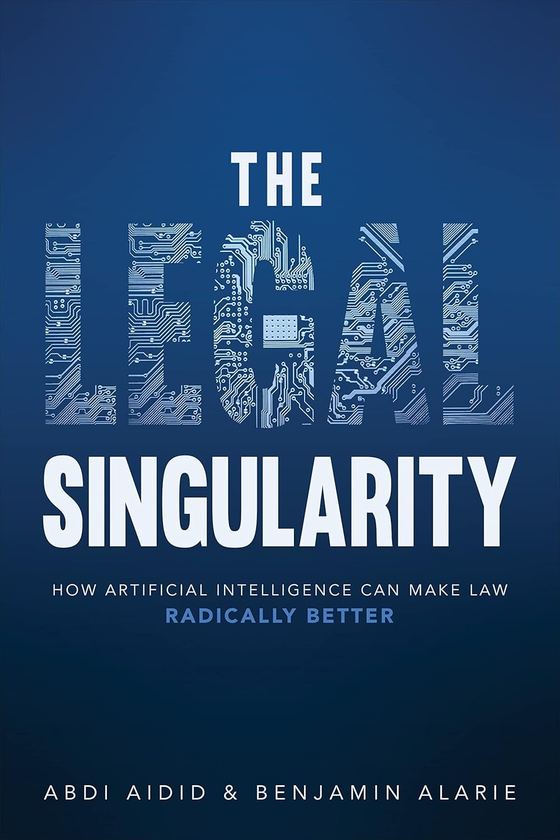
The Legal Singularity: How Artificial Intelligence Can Make Law Radically Better
University of Toronto Press 2023

The Legal Singularity

with Abdi Aidid

How AI can make law more predictable, coherent, and fair. An argument for a future state in which law becomes functionally complete, and for what a profession built around that transformation will look like.

Winner, 2024 AAP PROSE Award. Shortlisted, Donner Prize.

A selected record.

Recent & forthcoming
  • 2026
    Superjustice: Law in the Age of Artificial Intelligence — Introductionwith Samuel Becher
    SSRN
  • 2026
    Cognitive Infrastructure for Public Revenue Systems
    Working paper
  • 2026
    Legal Order in the Age of AI Agentswith Samuel Becher
    Working paper
  • 2025
    LexOptima: The Promise of AI-Enabled Legal Systemswith Samuel Becher
    U of T Law Journal
Foundational work
  • 2016
    The Path of the Law: Towards Legal SingularityThe paper that coined the term
    U of T Law Journal
  • 2016
    Regulation by MachineClifford Chance Prize, NeurIPS Barcelona
    NeurIPS
  • 2016
    Using Machine Learning to Predict Outcomes in Tax Lawwith Niblett and Yoon
    Canadian Business Law Journal
  • 2017
    Commitment and Cooperation on High CourtsBook, with Andrew Green
    Oxford University Press

Talks given, rooms held.

Keynotes on the computational transformation of law, the economics of professional services, and building durable AI-native companies.

i.

The Legal Singularity

ii.

Superjustice

iii.

Building Vertical AI

iv.

Computational Tax Law

Selected venues
  • Stanford Law
  • Oxford
  • Cambridge
  • University of Chicago
  • Columbia Law
  • NYU Law
  • McGill Law
  • TEDx at MIT
  • Max Planck Institute
  • Hebrew University
  • UNSW
  • NeurIPS
  • American Bar Association
  • Canadian Tax Foundation

For journalists & producers.

Press contact

Fortier PR

All media, interview, and speaking inquiries.

Mark Fortier
mark@fortierpr.com
Liz Wetzel
liz@fortierpr.com

Press kit

Bio (three lengths), high-resolution headshots, book covers, speaking topics, and complete CV. Available on request via Fortier PR.